To deepen inter-institutional exchanges and cooperation and jointly explore new pathways for internationalization in art-focused universities, on the morning of March 25, Dong Dejun, Party Committee Member and Vice President of Zhejiang Conservatory of Music, led a delegation comprising heads of relevant functional departments and secondary schools of the university to conduct a specialized research seminar on collaborative overseas education programs at the Xiangshan Campus of China Academy of Art. Cao Xiaoyang, Party Committee Member and Vice President of China Academy of Art, attended the meeting. Representatives from relevant functional departments and secondary schools of both institutions, along with related staff members, also participated. The meeting was chaired by Wang Jianjun, Vice Dean of the International Education College and Nantes Design Joint College of China Academy of Art.
At the beginning of the seminar, participants jointly watched the “Nantes Special Documentary,” gaining an intuitive understanding of the development history and educational achievements of the China Academy of Art–Nantes Design Joint College.
Vice President Dong Dejun first expressed his gratitude for the warm reception extended by the China Academy of Art (CAA). He noted that as a benchmark institution for art higher education in China, CAA’s Sino-French Nantes Design Joint Institute had an early start, high-quality construction, and outstanding outcomes, thus accumulating valuable experience. Currently, Zhejiang Conservatory of Music (ZJCM) has only one Sino-foreign cooperative education program, with limited academic levels and scope of coverage; therefore, the primary objective of this visit was to draw lessons from CAA’s experience in establishing standardized Sino-foreign cooperative education institutions, particularly by focusing on high-quality overseas universities such as those in the United Kingdom. Furthermore, he expressed his hope for enhanced collaboration between the two institutions in the future—specifically through activities including student exchange programs, joint talent development initiatives, art exhibitions, and academic exchanges—to deepen pragmatic cooperation in art education and achieve resource sharing, complementary strengths, and common development.
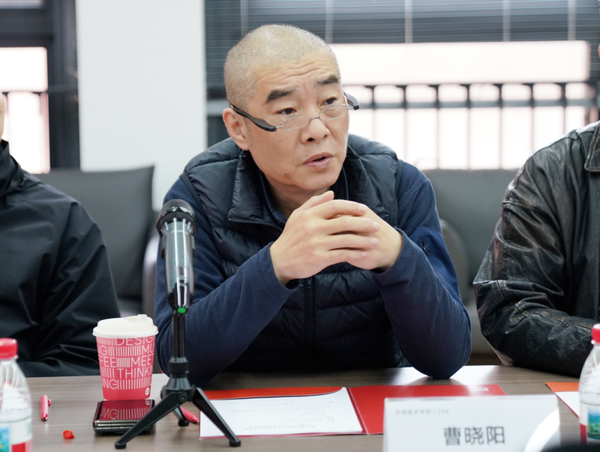
Cao Xiaoyang, Vice President of the China Academy of Art, extended a warm welcome to Dong Dejun and his delegation, and comprehensively reviewed the development of the Academy’s international education initiatives. He stated that since its founding in 1928, the Academy has consistently placed high priority on internationalization, treating exchanges and cooperation in art education between China and abroad as a core driver of its development. Through years of sustained effort, the Academy’s level of internationalization and its global influence have long ranked among the top nationwide among art institutions. Furthermore, addressing new trends in the internationalization of higher education, he shared insights into emerging challenges and considerations facing Sino-foreign cooperative education programs.
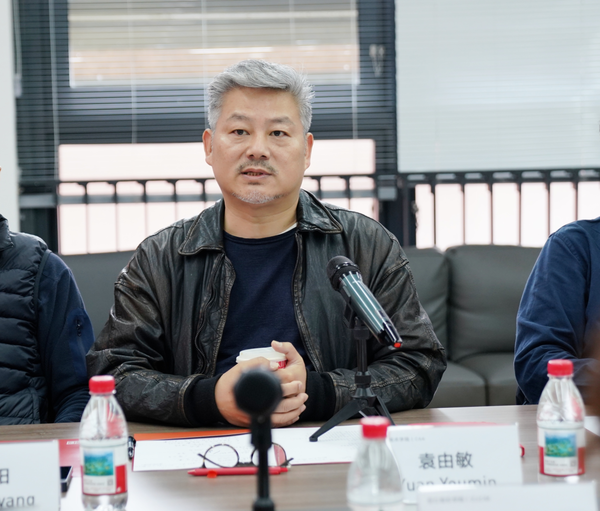
Yuan Youmin, Dean of the International Education College of China Academy of Art and the Sino-French Nantes Design Joint College, provided a detailed introduction to the construction process and educational practices of the college's first Sino-French cooperative education institution—the Sino-French Nantes Design Joint College. In running the college, both parties adhere to the principles of respecting cultural differences and differences in educational models, as well as distinctive education, promoting coordination in courses, credits, and policies. The cooperation covers three majors: Environmental Design, Product Design, and Art and Technology. The first graduates are expected this June, and the effectiveness of the education has been widely recognized.
During the exchange session, both sides engaged in in-depth and practical interactions around core topics such as the operation of Sino-foreign cooperative education institutions, the construction of talent training systems, curriculum design and teaching reform, faculty development, international exchange project management, and teaching assurance mechanisms. They fully exchanged views on common issues, difficulties, and obstacles encountered during the educational process, sharing practical experiences and problem-solving solutions.
This research symposium provided the two schools with an efficient platform for mutual learning and collaborative exchange, further deepening their understanding and trust in each other. Taking this exchange as an opportunity, the two schools will continue to deepen their collaboration, learning from each other and advancing together in the field of Sino-foreign cooperative education. They aim to jointly explore new paths and models for the internationalization of art universities in the new era, empowering the cultivation of top innovative art talents with high-quality Sino-foreign cooperative education outcomes, and injecting lasting momentum into the high-quality international development of higher art education in China.
 #1 Zheyin Road, Zhuantang Street, Xihu
District, Hangzhou, Zhejiang Province, China 310024
#1 Zheyin Road, Zhuantang Street, Xihu
District, Hangzhou, Zhejiang Province, China 310024 international@zjcm.edu.cn(for general
inquiries) admission@zjcm.edu.cn(for admission of international students)
international@zjcm.edu.cn(for general
inquiries) admission@zjcm.edu.cn(for admission of international students) +86-571-89808098 +86-571-89808099