On January 1, China Media Group’s special program “2026 Vienna New Year’s Concert” grandly opened at the National Convention Center and was live-streamed throughout on CMG Video. During this eleven-hour artistic extravaganza, over forty representatives from the cultural, sports, and arts sectors across the country gathered in Beijing, connecting Chinese and foreign civilizations through moving melodies and ushering in the New Year with magnificent music.
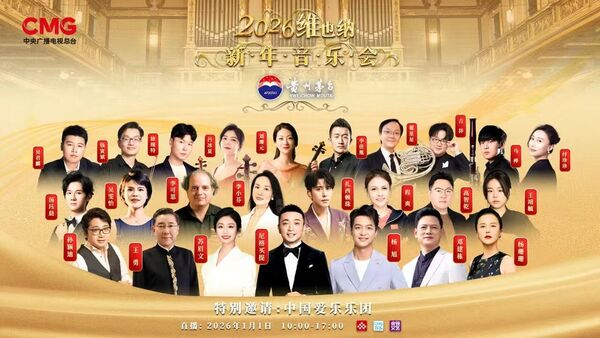
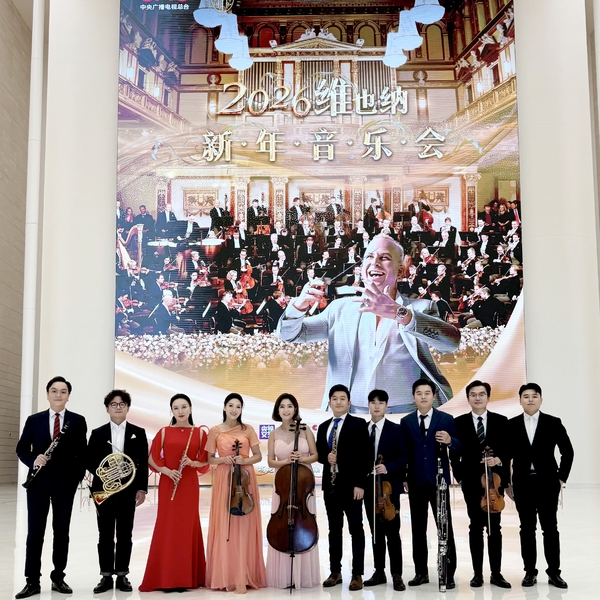
A team of 11 teachers from the Department of Orchestra,Collaborative Piano Department and Pop Music Department of Zhejiang Conservatory of Music was invited to perform, presenting a musical feast of both artistic height and expressive depth for a global audience.
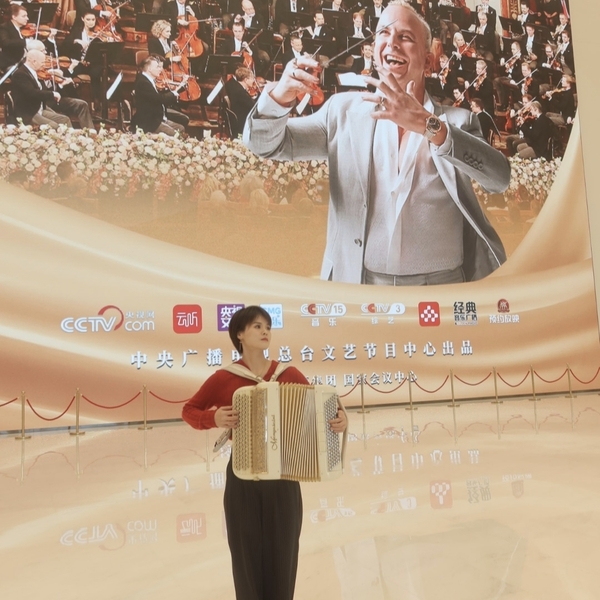
This year marks the 60th anniversary of the famous film "The Sound of Music." At the opening of the 2026 Vienna New Year's Concert, Wu Wenyi, a teacher from the Popular Music Department, teamed up with renowned musical theater actor Zhasidun Zhu to bring the classic song "Edelweiss" from The Sound of Music to the audience. Wu Wenyi's delicate and profound accordion accompaniment complemented Zhasidun Zhu's warm and rich singing, infusing this classic piece, which has spanned half a century, with new artistic appeal. Following this, Wu Wenyi improvised an accordion rendition of the iconic "The Skater's Waltz" from the Vienna New Year's Concert, seamlessly blending the fluid grace of ice dance with the elegant rhythm of the waltz through lively rhythm management and rich tonal variations, presenting the audience with a vibrant and clever musical scene.
The "Hangzhou Quartet," composed of Liu Liuyuan, Xu Yi, Lv Bingxia, and Qian Yinbin from the Orchestral Department, first took the stage with the fourth movement "The Rider" of Haydn's String Quartet in G minor. The lively melody intertwined with a strong sense of rhythm, creating a musical image of galloping horses across natural hills, and the unrestrained artistic expression aptly echoed the auspicious symbolism of the Year of the Horse in 2026.
Orchestral teachers Liu Liuyuan and Zhai Xingxing collaborated with piano teacher Wu Junlin to perform German composer Bruch's "Eight Pieces for Clarinet, Viola, and Piano." The three teachers demonstrated precise and harmonious coordination, showing a deep understanding of the relationship between the voices in chamber music, and through delicate interactions among the instruments, presented rich and moving layers of emotion. The warm and smooth timbre of the clarinet paired with the deep richness of the viola, set off by the crystal-clear tones of the piano, created a striking interplay between the voices, fully showcasing the essence of the chamber music art form.
The "Woodwind Quintet," composed of Li Jiayin, Fu Zhenzhen, Zhai Xingxing, Ji Xiang, and Ma Hua from the Orchestral Department, offered the audience an innovatively arranged selection of "Mozart Guide." This work, which selects multiple famous woodwind pieces by Austrian composer Mozart, cleverly arranged to showcase the timeless charm of Mozart's music, featured performances that were at times warm and rich, at times lively and light, fully demonstrating the woodwinds' rich tonal variations and strong artistic expressiveness, vividly interpreting the aesthetic pursuit of balance and harmony in classical music.
Next was Dvořák's Piano Quintet No. 2 in A major, third movement, which fully showcased the exquisite and layered dialogue between the piano and string parts. The "Hangzhou Quartet" and piano teacher Wu Junlin, with a high degree of coordination, created a rich and immersive auditory space. The piano's bright and clear melodic lines blended with the strings' warm and full harmonic textures, maintaining the uniqueness of each timbre while uniting in musical expression, leading the audience into a musical world that is both structurally rigorous and filled with emotional tension.
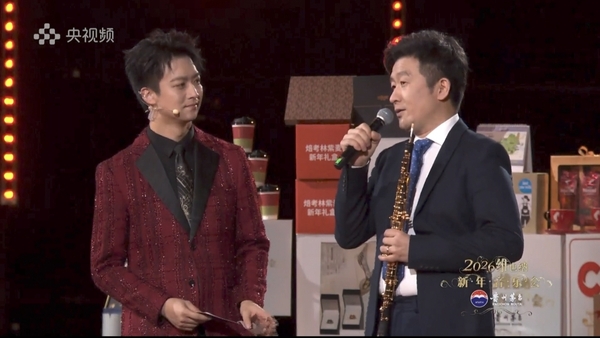
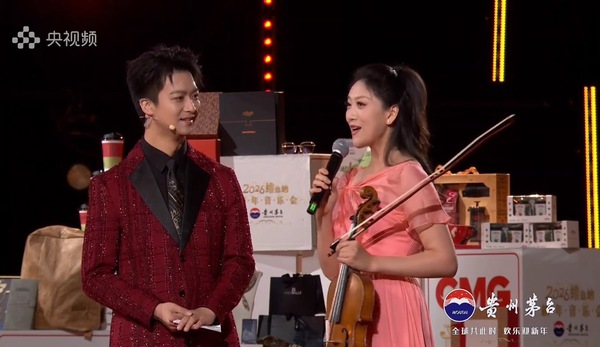
In order to allow the audience not only to 'listen' but also to 'understand' this concert, this live broadcast specially included an art interpretation session. Li Jiayin and Liu Liyuan provided the audience with professional and detailed guidance on the works: Li Jiayin explained the characteristics of the parts in selected passages from the woodwind quintet 'Mozart Guide' from the professional perspective of an oboe player; Liu Liyuan, drawing on his experience in chamber music performance, analyzed the features of the fourth movement 'The Knight' of the String Quartet in G minor and the compositional characteristics of Bruch's 'Eight Pieces for Clarinet, Viola, and Piano,' helping the audience better understand the artistic value of these classic works.
 #1 Zheyin Road, Zhuantang Street, Xihu
District, Hangzhou, Zhejiang Province, China 310024
#1 Zheyin Road, Zhuantang Street, Xihu
District, Hangzhou, Zhejiang Province, China 310024 international@zjcm.edu.cn(for general
inquiries) admission@zjcm.edu.cn(for admission of international students)
international@zjcm.edu.cn(for general
inquiries) admission@zjcm.edu.cn(for admission of international students) +86-571-89808098 +86-571-89808099