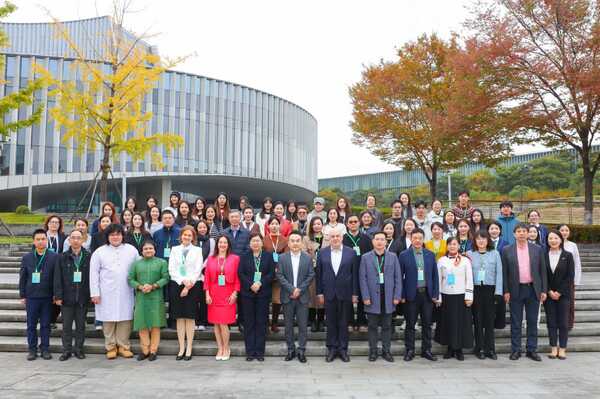
The “First Kodály International Music and Culture Academic Symposium” was held in Hangzhou from November 3 to 5. Organized by Zhejiang Conservatory of Music, the symposium was co-hosted by its Academic Affairs Department ,International Office , and the Kodály International Music and Culture Center. Under the theme “From Tradition to the Future: In-Depth Dialogue Between Chinese and Western Musical Cultures and Contemporary Resonance of the Kodály Educational Philosophy,” the symposium brought together scholars and experts from China, Hungary, Switzerland, India, and other countries to jointly celebrate this academic event.
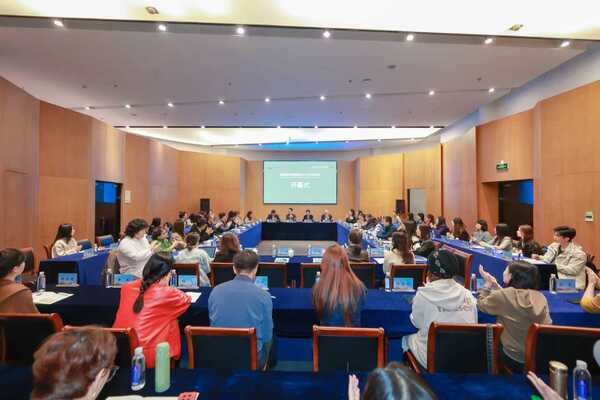
Professor Dong Dejun, Vice President of Zhejiang Conservatory of Music, delivered a speech. He stated that music is a universal language that transcends national boundaries and serves as a bridge connecting hearts and minds. As Kodály once said, “Let music belong to everyone.” He expressed the hope that, through this international academic platform, participants would engage in in-depth discussions on integrating Kodály’s musical and cultural philosophy with the context of Chinese music education, thereby promoting the creative transformation and innovative development of China’s outstanding traditional musical culture, and enabling music to become a vital force driving mutual learning among civilizations and enhancing people-to-people connectivity.
Professor Gábor Bodnár, Director of the Institute of Arts Communication and Music at the Faculty of Humanities, Eötvös Loránd University (ELTE) in Hungary, delivered his remarks via video link, extending his best wishes for the Center’s development. He noted that the Kodály International Music and Culture Center is named after an outstanding alumnus and music educator of ELTE who both studied and taught at the university, and who introduced the essence of Hungarian folk music to the world. This academic symposium, guided by that same spirit, vividly embodies the profound friendship between Zhejiang Conservatory of Music and ELTE. He believes this event represents not only an academic dialogue but also a firm step forward in the exchange and mutual learning between Chinese and Hungarian folk music traditions.
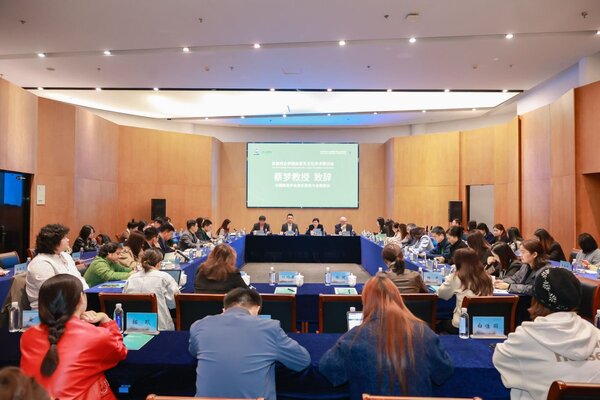
Speech by Professor Cai Meng, Chairperson of the Music Education Branch of the Chinese Society of Education. She stated that the noble ideal of the Kodály Method—“music for everyone”—resonates profoundly with our ancient wisdom of “Education for all, without discrimination.” How can we ensure that the lineage of ethnic music is inherited and revitalized in every child? This is precisely the core mission of our conference. We must consolidate our foundations through “Inheritance,” broaden our horizons through “integration,” and forge new paths for the future through “Innovation”, thereby cultivating the next generation—one that possesses cultural confidence while also understanding and respecting the world’s diverse cultures.
The realm of "speculation"
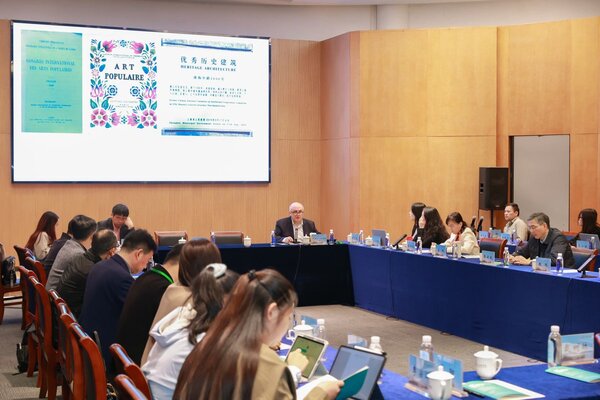
In his keynote speech, Professor Xavier Bouvier of the Haute École de Musique de Genève, Switzerland, addressed the theme “Interconnected Voices and Shared Beauty: A Cultural Dialogue among Kodály, Orff, and Dalcroze.” Taking as his starting point the cross-cultural educational practices undertaken by veteran artists and educators such as Cheng Yanqiu, he vividly illustrated their early explorations into integrating Eastern and Western artistic concepts and pedagogical approaches. He then systematically expounded upon the intrinsic connections among the world’s three major music teaching methodologies and their contemporary significance—building arguments progressively and thought-provokingly, thereby not only broadening academic horizons but also offering rich intellectual inspiration to the attending scholars.
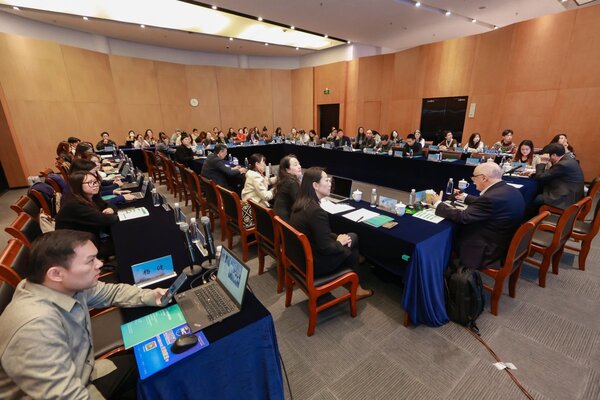
The subsequent expert seminar was moderated by Professor Xiang Wen, Vice Dean of the School of Music Education at Wuhan Conservatory of Music. Numerous scholars and experts from both within and outside the conservatory engaged in multidimensional, in-depth exchanges and dialogues centered on core topics such as “The Contemporary Value of Chinese and Western Ethnic Musical Heritage,” “Kodály’s Musical Compositions and Musicological Research,” and “Paths Toward Localization in Music Education.” The special symposium for young scholars held on the second day likewise featured numerous highlights and vibrant intellectual exchange. Drawing upon perspectives from philosophy, history, ethnomusicology, musical analysis, music performance, and music pedagogy, young scholars presented innovative reflections on theoretical frameworks and practical approaches in music education. Their presentations not only demonstrated solid academic foundations and acute problem awareness but also reflected broad international perspectives and a strong sense of local identity—exemplifying the scholarly vitality, innovative spirit, and sense of mission characteristic of contemporary Chinese young scholars, thereby infusing dynamic youthful energy into research in these fields. “The Rhythm of Scenery” The symposium also included diverse activities such as workshops led by Hungarian and Indian experts and a chamber music concert featuring musicians from China and Hungary, fostering an atmosphere where theory and practice are equally emphasized and tradition intertwines with innovation.
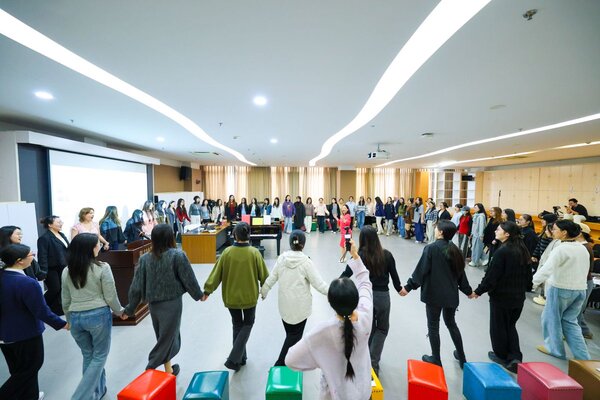
In the Hungarian music education workshop presented jointly by Professors Gabriella Báródi and Andrea Fehér, the Curwen hand signs in the Kodály teaching method became a bridge connecting Eastern and Western musical vocabularies. Using Hungarian folk songs as material, they guided students by concretizing hand gestures, transforming abstract pitches into tangible melodic lines, and helping students experience the simplicity and deep emotion of Hungarian folk songs through clapping, singing, and multi-voice collaboration. 'This cross-cultural musical dialogue is not only a transmission of skills but also a resonance of the soul, making one feel as if standing by the Danube, hearing the timeless songs in the veins of the Hungarian people,' said the students participating in the masterclass.
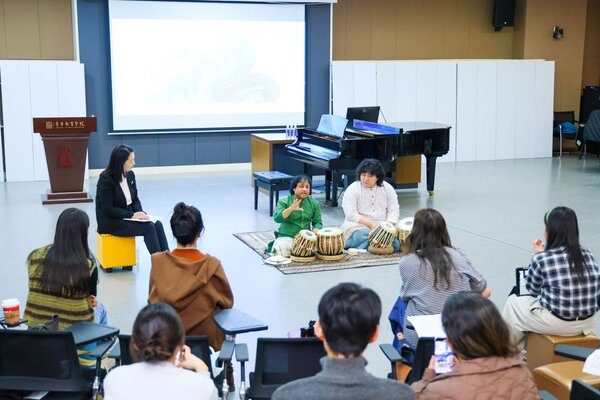
The Indian tabla workshop conducted by Professor Bivakar Choudhury was equally remarkable. He began by explaining the origins of the Indian tabla—the sheepskin-covered drumheads and the dual-tone variations—eloquently revealing the millennia-old connection between drumming and faith. Afterwards, he introduced the uniquely charming "Tintala"rhythm in Indian music, guiding the students into a vibrant, exotic realm of rhythm. During the interactive session, he led the students to try playing unfamiliar yet captivating beats, as if following the sound of camel bells through time, embarking on a musical journey along the Silk Road. "This workshop was like a cultural adventure, allowing us to hear a different type of Eastern wisdom in the gaps of rhythm and to feel the resonant harmony between music and the universe."
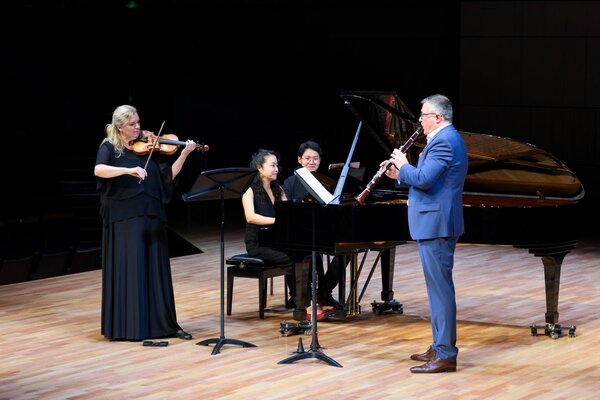
After a whole day of busy and fulfilling academic exchanges, a chamber music concert jointly presented by Chinese and Hungarian musicians beautifully illustrated the theme of 'communication through sound, sharing beauty together' for the attending scholars. Amid the interweaving of polyphony, the idea advocated by the Kodály method that 'national music is like a mother tongue' was artistically confirmed—those melodies born from the soil, though in different languages, share the resonance of human emotions; it also allowed the scholars present to personally experience that when the East meets the West, when tradition encounters modernity, a concert becomes the most elegant bridge, carrying the dialogue of civilizations and harmonious resonance leading to the heart.
 #1 Zheyin Road, Zhuantang Street, Xihu
District, Hangzhou, Zhejiang Province, China 310024
#1 Zheyin Road, Zhuantang Street, Xihu
District, Hangzhou, Zhejiang Province, China 310024 international@zjcm.edu.cn(for general
inquiries) admission@zjcm.edu.cn(for admission of international students)
international@zjcm.edu.cn(for general
inquiries) admission@zjcm.edu.cn(for admission of international students) +86-571-89808098 +86-571-89808099